AI-Driven Solutions for a Non-Terrestrial Resources
AI for NON-TERRESTRIAL RESOURCES
GeonatIQ applies machine learning and AI to the analysis of planetary and space-based datasets, extending techniques developed for Earth systems into non-terrestrial environments.
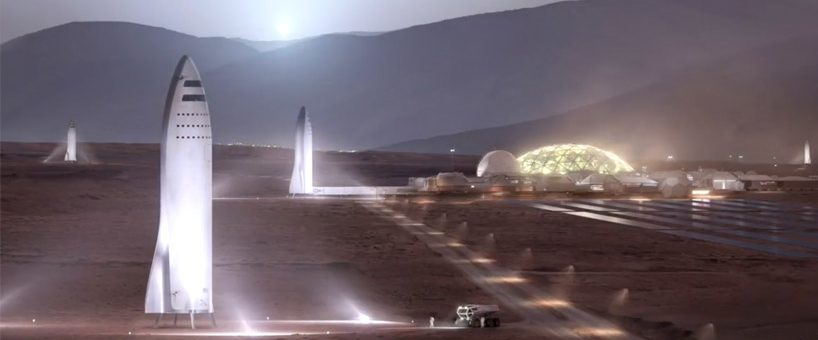
One example includes the use of AI-driven computer vision and signal processing for satellite and orbital imagery. In collaboration with academic researchers, we have developed advanced models to remove noise from hyperspectral data captured by the Compact Reconnaissance Imaging Spectrometer for Mars (CRISM). These denoising approaches are designed to overcome sensor degradation, sparse calibration data, and the absence of surface ground truth, enabling more reliable extraction of Martian mineralogical signatures. By improving data fidelity, this work supports a deeper understanding of Mars’ surface composition, past environmental conditions, and the identification of priority regions for further scientific investigation and exploration.
Beyond hyperspectral denoising, we have worked on AI models for planetary surface classification, anomaly detection in orbital imagery, and automated mineral mapping across large spatial datasets. These approaches are transferable to lunar, asteroid, and other planetary missions where data volumes are large and manual interpretation is a limiting factor.
We also build AI agents to support non-terrestrial exploration workflows, including agents that can monitor new mission data releases, scan scientific publications for relevant discoveries, and flag emerging signals related to planetary resources and exploration targets. Together, these systems demonstrate how AI can augment planetary science, enabling scalable, data-driven exploration beyond Earth.